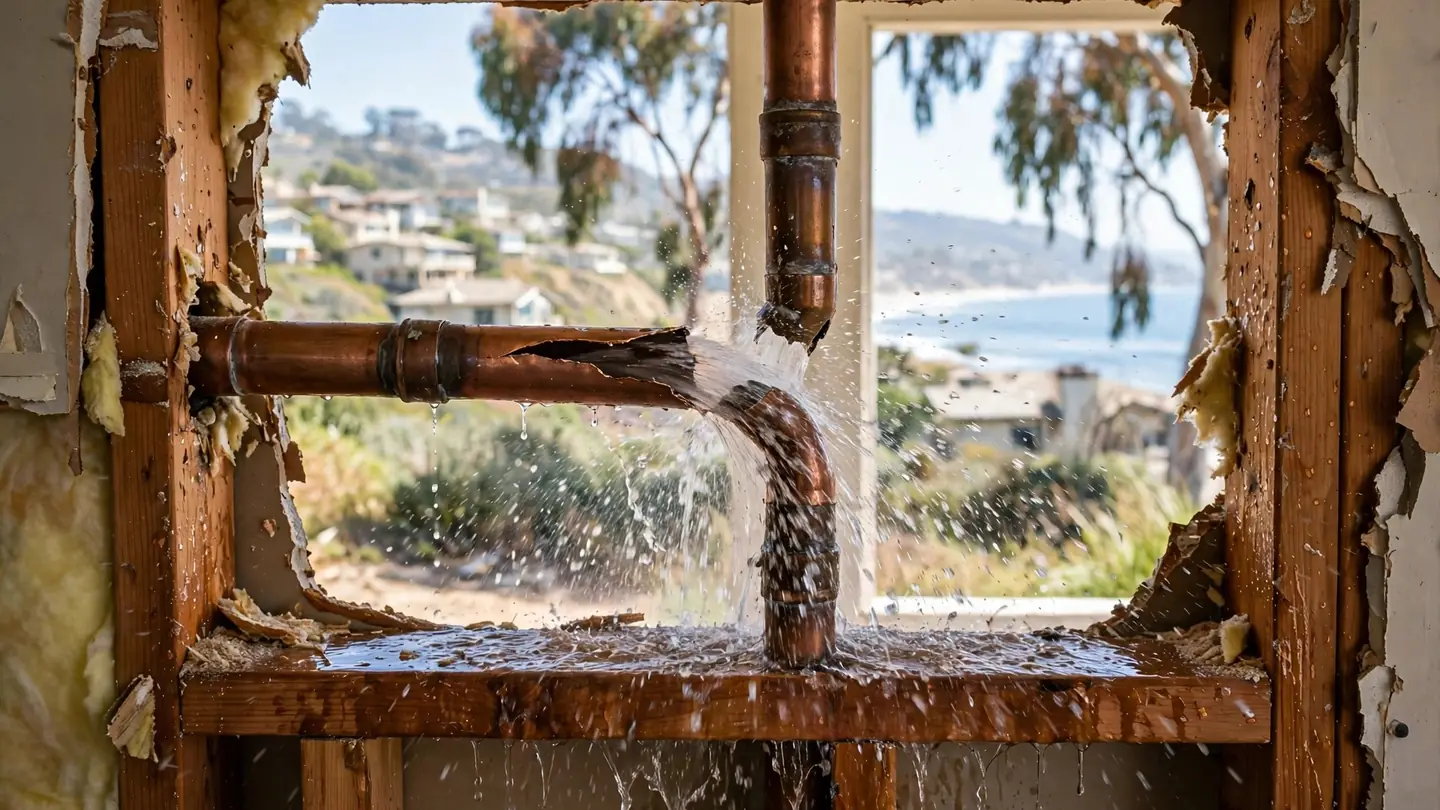
Key facts: Burst pipes
- Freezing is rarely the cause of burst pipes in coastal San Diego County; age, corrosion and pressure are.
- A pressurised supply line keeps flowing until the valve or main is closed.
- Clean water from a supply line can be dried in place more often than flood or drain water, if drying starts quickly.
- EPA guidance recommends drying wet building materials within 24 to 48 hours.
Causes
Why pipes fail in Del Mar homes
Aging copper
Copper lines installed decades ago thin from the inside as water flows through them. Pinholes develop, and a weakened section can split under pressure.
Galvanized steel
Older homes may still have galvanized pipe, which rusts from inside and fails at threaded joints.
Supply hoses and connectors
Plastic and rubber supply lines to toilets, faucets, washers and ice makers wear out and can burst without warning.
High water pressure
Pressure above what fixtures are designed for stresses every joint. A failed pressure regulator can raise it suddenly.
Water hammer
Valves that close quickly, such as on washers and dishwashers, send pressure shocks through the lines that loosen fittings over time.
Pipe movement and wear
Pipes that rub against framing or concrete wear through over time, especially hot lines that expand and contract.
How water spreads
What a burst pipe does inside a house
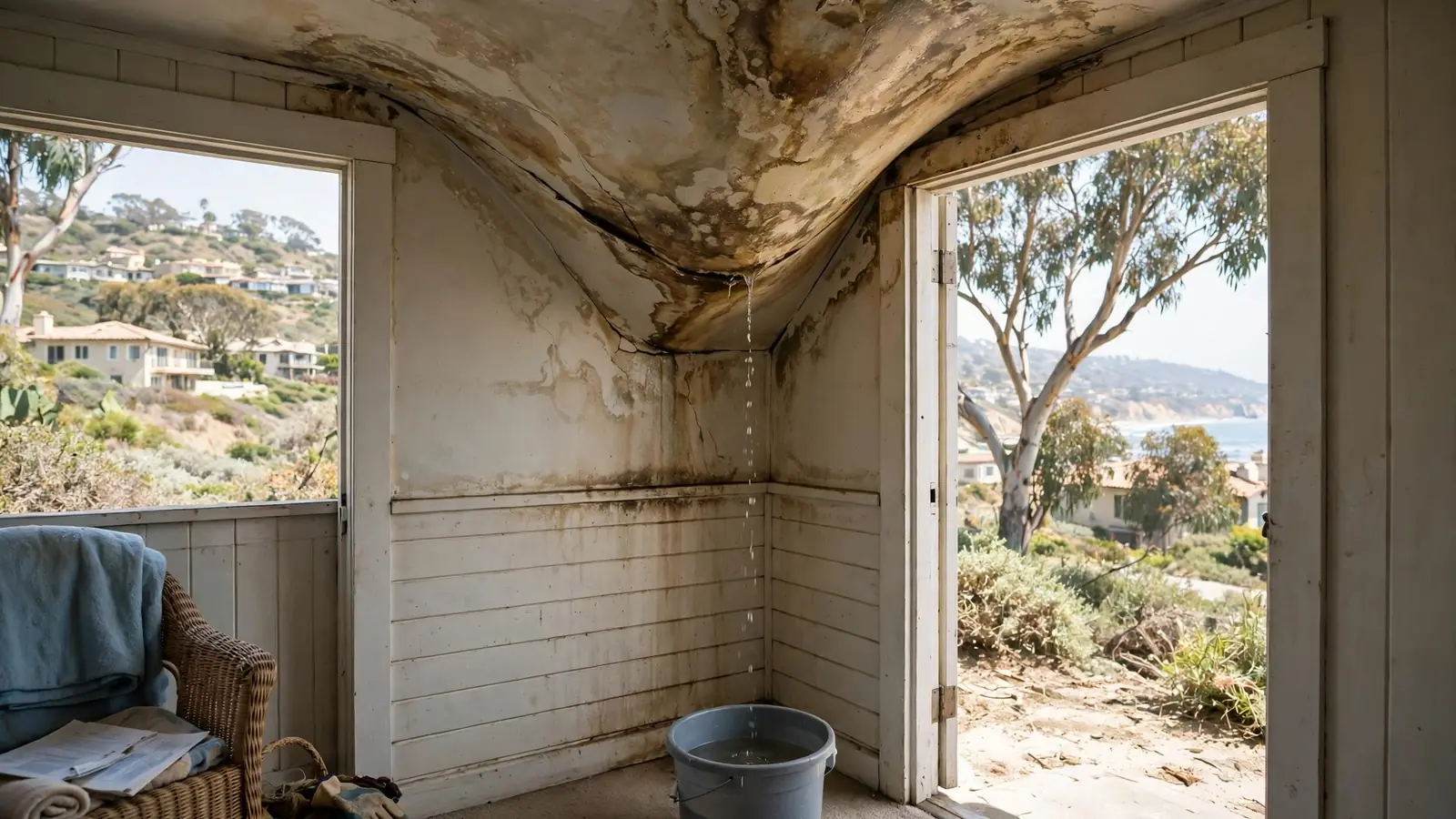
When a pipe bursts behind a wall, the water fills the bottom of the stud cavity, soaks the insulation and runs out under the bottom plate onto the floor, often on both sides of the wall. If the pipe is in a ceiling, water collects on top of the drywall until it finds a seam or fixture to drip through, or the drywall sags. If it is under a slab, it spreads under the flooring and may come up in a room far from the pipe.
The visible water is usually a fraction of what got into the house. That is why restorers map moisture with meters and thermal cameras before deciding what to remove. A small puddle in the hallway can sit on top of three wet rooms.
Right away
What to do when a pipe bursts
- 1
Close the main shut-off
Do it first, even before you find the exact pipe. Then open a faucet at the lowest point of the house to drain pressure.
- 2
Cut power to wet areas
Switch off breakers for rooms where water is near outlets or fixtures, if it is safe to reach the panel.
- 3
Relieve a bulging ceiling
Do not stand under it. If water is pooling in a ceiling, a professional can drain it safely.
- 4
Document
Photograph the pipe, the water and every affected room before cleanup.
- 5
Call a plumber and a restorer
The plumber repairs the pipe; the restoration contractor dries the house. Both can start the same day.
Pipe types
Pipe materials and how they usually fail
| Material | Typical failure | Notes |
|---|---|---|
| Copper | Pinholes, split sections, failed solder joints | Common in homes from the 1960s on |
| Galvanized steel | Rust from inside, leaks at threads | Found in older homes; usually replaced |
| PEX | Fitting failures, damage from nails or rodents | Common in remodels and repipes |
| CPVC | Brittle cracking with age | Found in some homes from the 1980s and 1990s |
| Braided supply hoses | Bursting at the crimp or along the hose | Replace on a schedule |
The drying
How burst pipe damage is dried
Water from a supply line is clean when it leaves the pipe, which is good news: if drying starts quickly, more can be dried in place. Carpet may be saved if the pad is replaced, and drywall that is firm and clean can often be dried by opening small holes behind the baseboard and pushing dry air into the cavity. Wet insulation inside the wall usually comes out, which may mean removing a strip of drywall.
Dehumidifiers and air movers run around the clock, and readings are taken daily on walls, floors and framing. Most burst pipe jobs dry in three to five days once the pipe is fixed. A slab or hardwood floor can take longer.
If water sat for more than a day or two, or it ran through dirty areas, it may have become contaminated and the plan changes toward removal. That is one more reason to call promptly.
Looking ahead
After the pipe is fixed
One failed pipe in an older system is often a sign that others are close. Ask the plumber about the condition of the rest of the lines and whether a repipe or partial reroute makes sense. Replace any supply hoses older than a few years. A pressure gauge on an outdoor spigot tells you whether the pressure regulator is working; a plumber can replace it if not.
Leak sensors under sinks, behind toilets and by the water heater, or a whole-house shut-off valve that closes when it senses a leak, can turn the next burst into a small puddle. For homes that sit empty part of the year, that is especially worthwhile.
Insurance usually treats a sudden burst differently from a slow leak. Sudden damage is often covered under homeowners policies; long-term leaks and the pipe repair itself may not be. Keep the plumber's report and the drying log.
FAQ
Burst pipe questions
Can pipes burst without freezing?
Yes. In coastal California, most bursts come from age, corrosion, pressure and worn supply lines rather than cold.
How long can a burst pipe run before major damage?
Minutes matter. A supply line can release many gallons per minute, so closing the main quickly is the most important step.
Will my walls need to be torn out?
Not always. Clean water caught quickly can often be dried through small holes. Wet insulation, soft drywall or contamination mean some removal.
Should I open the wall myself to find the pipe?
No. Close the main and let the plumber locate it. Opening walls blindly causes extra damage and, in older homes, may disturb materials that need testing first.
Is burst pipe damage covered by insurance?
Sudden bursts are commonly covered, subject to the policy. Gradual leaks and the pipe repair may be treated differently.