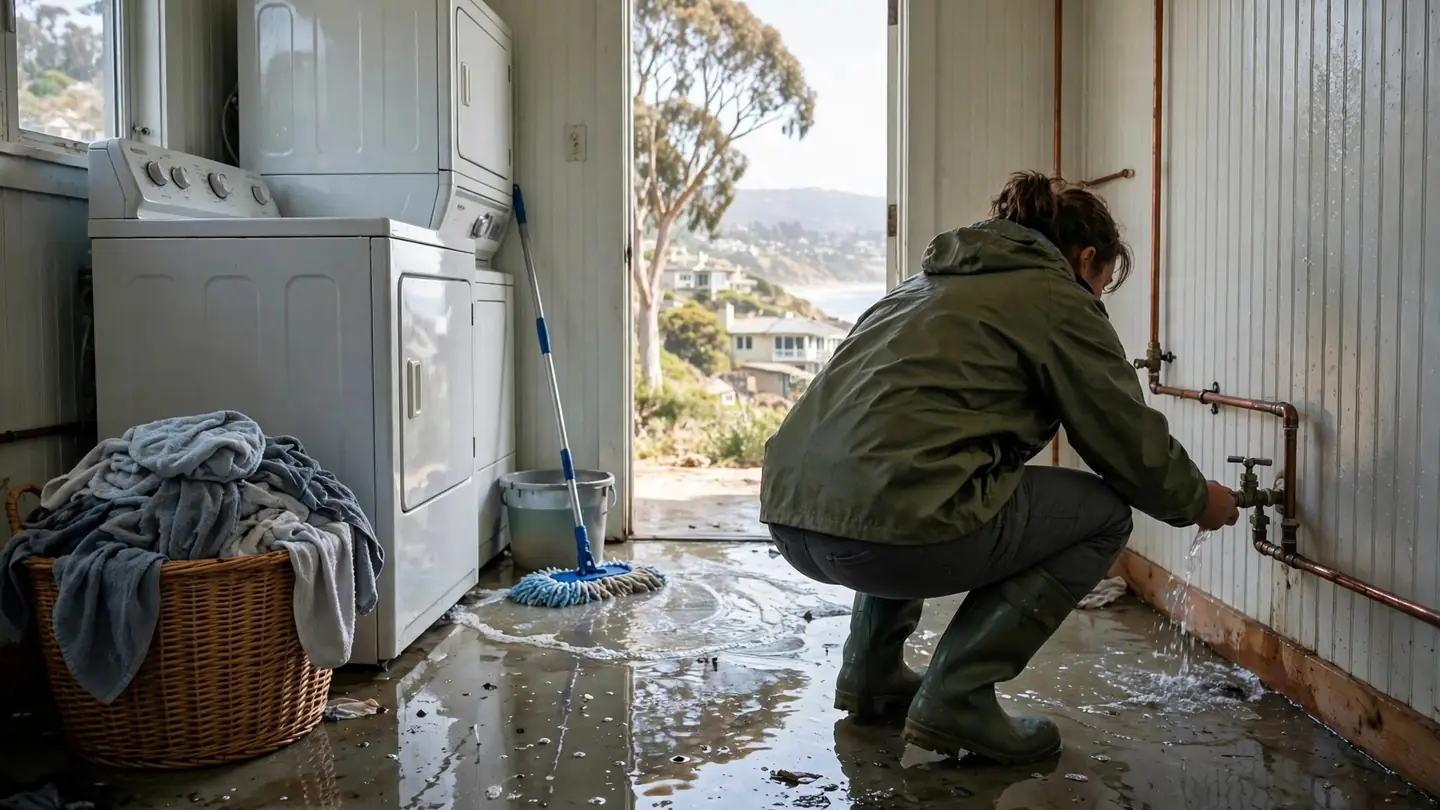
Key facts: The first hour
- Stopping the source and cutting power to wet areas are the two most important first steps.
- EPA guidance says wet materials should be dried within 24 to 48 hours to limit mold growth.
- Photos and video taken before cleanup are the strongest evidence for an insurance claim.
- Flood water from outside, and water from drains, is treated as contaminated.
The checklist
Minute by minute: the first hour
- 1
Minutes 0 to 5: stop the water
For a fixture, close the valve under it or behind it. For anything else, close the main shut-off, usually where the water line enters the house or near the garage. For a water heater, close the cold supply valve on top. In a condo, if you cannot find the source, call the HOA emergency line.
- 2
Minutes 5 to 10: make it safe
If water is near outlets, cords or the panel, switch off the breakers for that area only if you can reach the panel without standing in water. Keep children and pets away. Stay out from under any ceiling that bulges.
- 3
Minutes 10 to 20: document
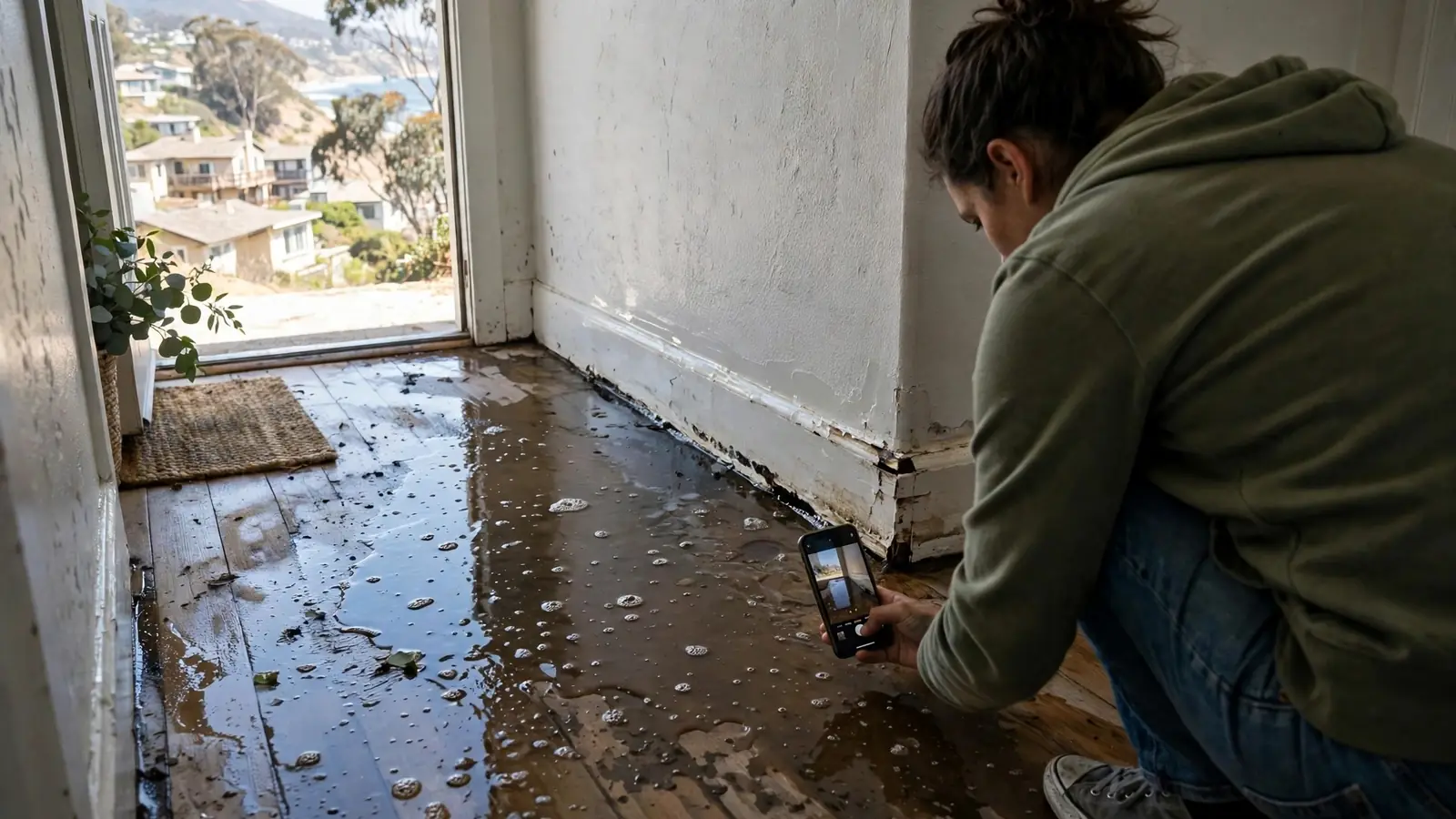
Take wide photos of every wet room, close-ups of the source and damaged items, and a short video walking through. Include the water line on walls and any outdoor conditions if a storm caused it.
- 4
Minutes 20 to 40: protect belongings
Move electronics, papers, rugs and small furniture to a dry room. Put foil or plastic under furniture legs that must stay. Hang up wet curtains and lift skirted furniture off the floor.
- 5
Minutes 40 to 60: start drying and call
Mop or wet-vacuum standing water from hard floors if it is clean water. Open interior doors. Then call to be connected with a restoration contractor, and report the loss to your insurer.
Know your water
Clean water, grey water or flood water?
Restorers sort water into three categories because it changes what can be saved. Water from a broken supply line is clean at first. Water from a washing machine, dishwasher or a toilet tank is grey. Water from a sewer backup, a toilet bowl after use, or a flood from outside is black, the most contaminated kind.
Clean water becomes grey and then black as it sits and picks up dirt from floors and materials, often within a day or two. That is one reason speed matters. If your water is grey or black, wear gloves and boots, do not try to save carpet or pad, and leave removal to a professional.
In Del Mar, flood water from the San Dieguito River, storm runoff on the hillsides and ocean water on beachfront lots all count as contaminated, even when they look clear.
Belongings
What to move, what to leave
| Item | What to do |
|---|---|
| Electronics and chargers | Unplug if dry hands and dry floor allow; move to a dry room |
| Paper documents and photos | Move to a dry room; freeze important wet papers in plastic bags |
| Area rugs | Roll and move; keep separate from dry items |
| Wood furniture | Lift onto blocks or foil; wipe dry; do not use heat |
| Upholstered furniture | Lift off the floor; if soaked with dirty water, leave for assessment |
| Food and medicine touched by dirty water | Set aside to photograph, then discard |
Avoid these
Mistakes that make water damage worse
Using a household vacuum on water can shock you and ruins the vacuum. Turning up the heat to dry things faster speeds mold growth in wet walls. Pulling up wet drywall or ceiling texture in an older home can release asbestos or lead dust. [3] Running a central heating or air system when the water was dirty can spread contamination through the house.
Another common mistake is waiting to see whether things dry on their own. Surfaces often look dry within a day while the wall cavity, the bottom plate or the slab stays wet. Mold does not need much time. If water soaked into anything beyond a hard floor, it is worth having it measured.
Finally, do not throw out damaged items before photographing them. Adjusters want to see what was lost, and many people discard things in the rush to clean up.
Away from home
If the house is a second home or rental
If a neighbor, guest or property manager calls to say there is water in a house you are not at, ask them to close the main shut-off, keep out of wet rooms with power on, and take photos and a short video if it is safe. Then call to arrange a contractor visit; many can meet a manager or neighbor for access. Ask the person on site roughly when the house was last checked, since that tells the contractor how long the water may have run. Notify your insurer from wherever you are; you do not have to be present for mitigation to begin.
Who to call
Calling your insurer and a contractor
Report the loss to your insurer the same day if you can, and ask what they need from you. Most policies expect you to take reasonable steps to prevent further damage, which is exactly what calling for mitigation does. You do not usually need to wait for an adjuster before drying starts, but do keep your photos and receipts.
When you call this line, you are connected with an independent restoration contractor who can talk you through anything you are unsure about and arrange a visit. Have ready where the water came from, roughly how long it ran, which rooms are wet and whether power is off.
FAQ
First-hour questions
Should I turn off the main water even if I found the leak?
If you can close a valve at the fixture, that is enough. If the fixture valve does not work or you are not sure of the source, close the main.
Is it safe to stay in the house?
Usually, if power is safe, sanitation works and the water was clean. Sewage, flood water or a lost bathroom and kitchen are reasons to stay elsewhere for a while.
Can I start cleaning before the adjuster comes?
Yes, after you document. Protecting the property from further damage is expected; just keep photos and a list of what you threw away.
What if I live in a condo and the water is from upstairs?
Alert the neighbor and the HOA, document your unit, and call. Your insurer can sort out responsibility later.