Key facts: Sewage Cleanup
- Sewage is classified as Category 3 water under the IICRC S500 standard, the most contaminated class.
- Porous materials soaked by sewage, such as carpet, pad and drywall, are normally removed rather than cleaned.
- Federal mold guidance recommends drying wet building materials within 24 to 48 hours.
- In most California cities the property owner is responsible for the private sewer lateral from the house to the public main.
How it works
What sewage cleanup involves
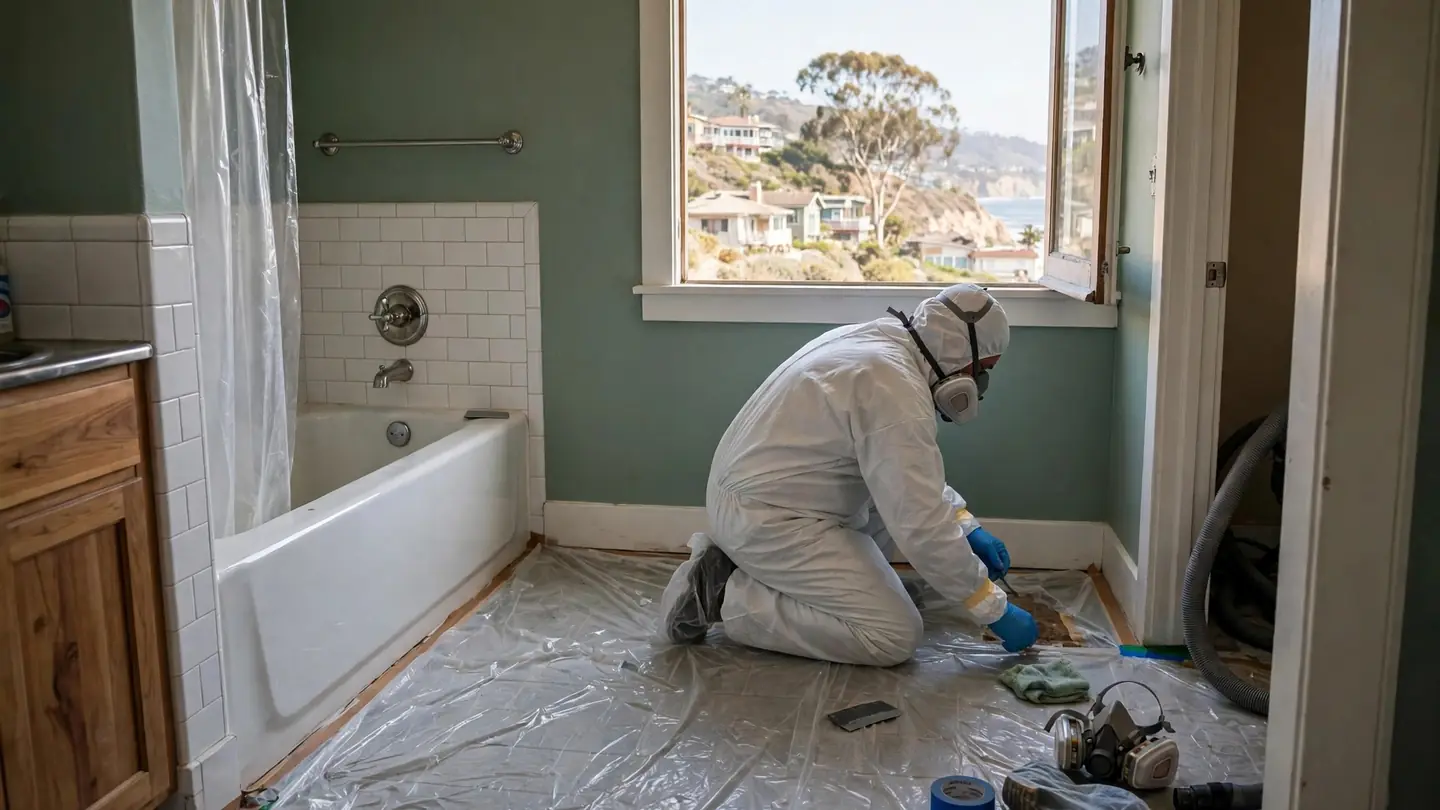
Sewage cleanup is a contamination job first and a drying job second. The water itself is only part of the problem; the waste, paper and organic matter it carries settle onto every surface it touches and soak into anything porous. A restorer's job is to remove that material, clean and disinfect the surfaces that can be saved, discard what cannot, and then dry the structure so nothing left behind can grow.
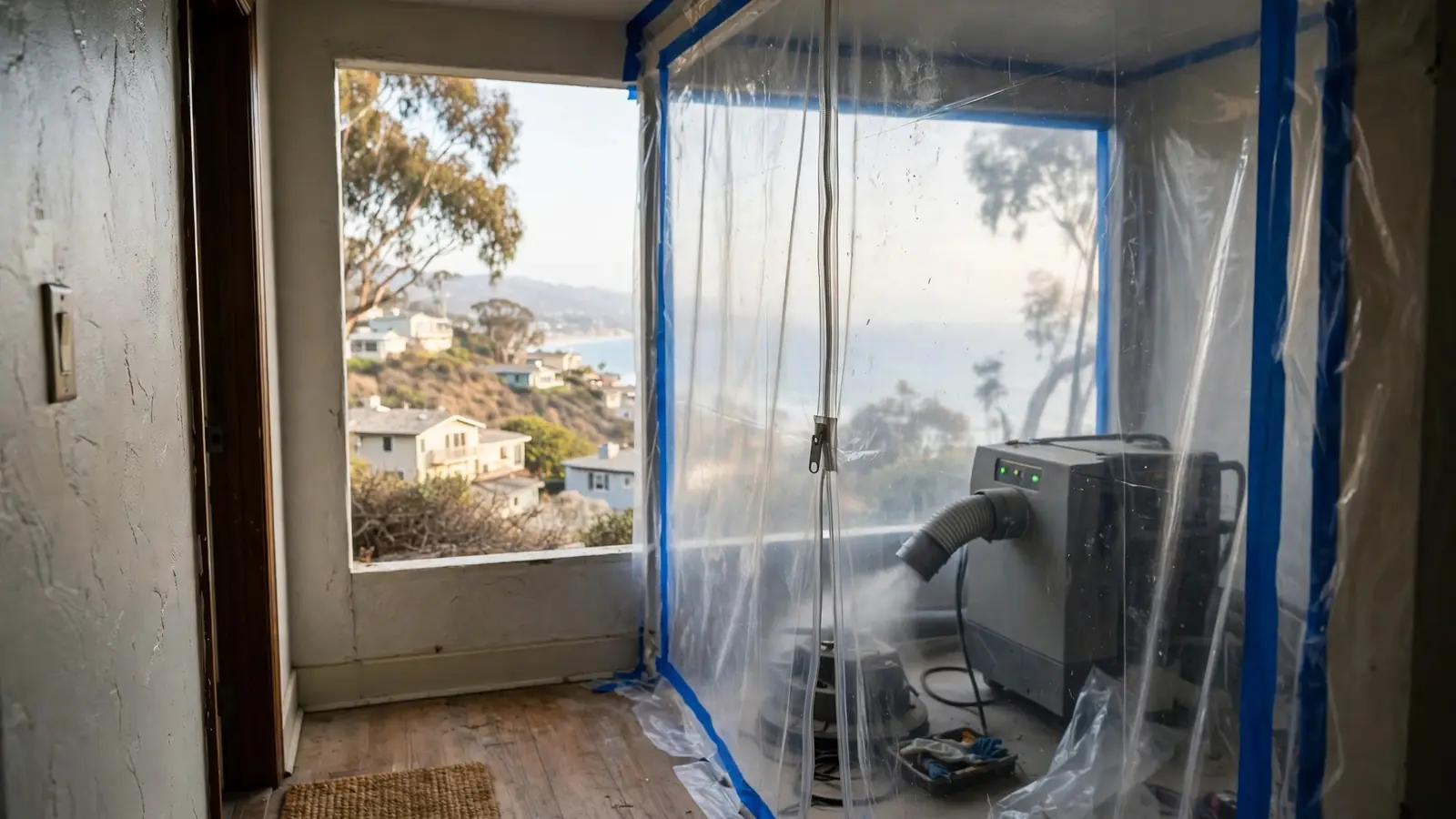
Because of the health risk, the work area is isolated before cleanup begins. Plastic sheeting and zipper doors separate the affected rooms from the rest of the house, air scrubbers with HEPA filters run under negative pressure so contaminated air is pulled out rather than pushed into clean rooms, and workers wear suits, gloves, boots, eye protection and respirators. Contaminated debris leaves the house bagged.
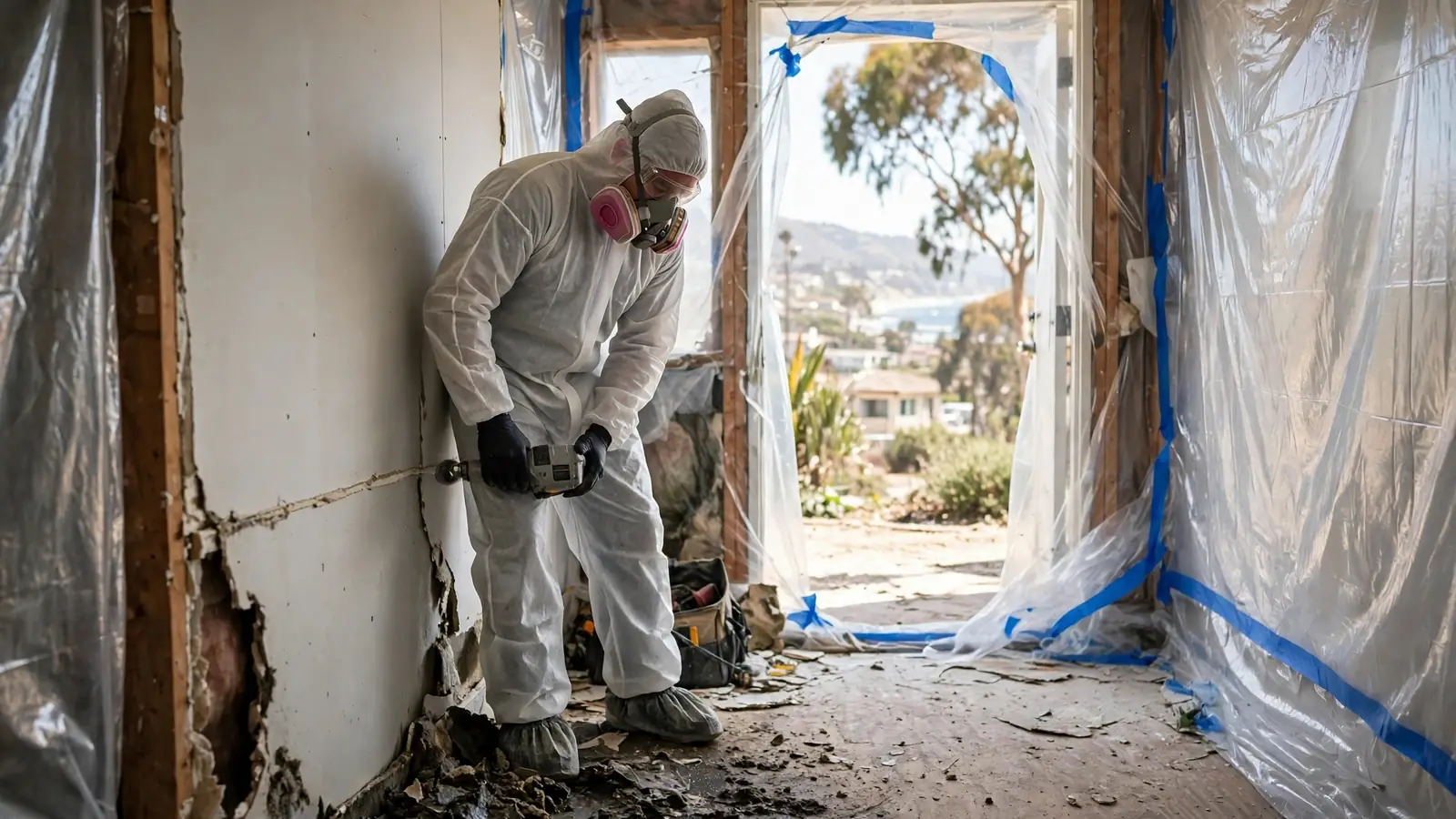
What sets a sewage job apart is how little gets dried in place. With a clean water leak, a contractor may dry carpet and drywall where they are. With sewage, carpet, pad, drywall below the wet line, insulation and most cabinet bases are removed. Hard, non-porous surfaces such as tile, sealed concrete, metal and solid framing are scrubbed with detergent, rinsed, treated with a disinfectant and then dried.
The job ends with proof. Moisture readings show the structure is dry, the area has no remaining odor, and if you or your insurer ask for it, surface testing can confirm the cleaning worked. Only after that does rebuild start.
Warning signs
How to tell a sewage problem from a clean leak
Water rising from a floor drain or shower
When water comes up through the lowest drain in the house, it is coming back from the sewer line, not from a supply pipe. Treat it as sewage.
Several fixtures gurgling or draining slowly
A single slow sink is usually a local clog. Several fixtures backing up together, especially the lowest toilet, point to a blockage in the main line or lateral.
A sewage smell near the floor
A strong sulphur or waste smell, especially after rain, can mean a leak at a cracked drain pipe under the slab or behind a wall even when no water is visible.
Toilet overflow that would not stop
If a toilet keeps filling and overflowing even with the supply valve closed, the blockage is downstream and waste is coming back up from the line.
Wet patches in the yard over the lateral
Soggy, unusually green or smelly ground between the house and the street can mark a broken lateral leaking into the soil.
Backup during a heavy storm
When backups happen only in big rain, groundwater or stormwater is probably getting into the sewer through cracks, joints or illegal connections and overloading the line.
Local causes
Why sewage backs up in Del Mar homes
Many of the houses in and around Del Mar were built decades ago, and their sewer laterals, the private pipe that runs from the house to the public main, are often clay or cast iron. Clay joints separate and let tree roots in; cast iron corrodes from the inside and eventually cracks. Mature trees on older lots in Olde Del Mar and Del Mar Heights send roots toward the moisture in those joints, and over time the roots form a mat that catches paper and grease.
Rain is the second common trigger. During strong winter storms, groundwater and runoff can enter sewer pipes through cracks and loose joints. When enough water gets in, the system surcharges and the lowest drain connected to it, often a lower-level shower, laundry drain or garage floor drain, becomes the outlet. Homes on lower lots or with rooms below street level feel this first.
In condo buildings and mixed-use blocks in the village, a backup can start in one unit and affect others. A blocked shared stack can push waste out of a fixture in a ground-floor unit even if that owner did nothing to cause it. Grease from restaurant kitchens can also build up in shared lines.
Finally, a backup can be ordinary bad luck: wipes, cooking fat or a child's toy in a toilet. The cause matters because it decides whether the line needs a plumber to clear or repair it before cleanup can finish. Cleaning a room while the line is still blocked only means doing it twice.
The cleanup
How a sewage cleanup is carried out
- 1
Stop using the plumbing
Do not flush, run sinks or use the washer until a plumber has cleared or isolated the line. Each use sends more waste into the flooded area.
- 2
Isolate the area
Plastic containment goes up, HVAC returns in the area are sealed, and an air scrubber starts. Doors to the rest of the house stay closed.
- 3
Remove the waste water
Liquid is extracted with pumps or wet vacuums into a sealed tank. Solids are scooped and bagged. Nothing is swept or pushed into clean areas.
- 4
Strip contaminated porous materials
Carpet, pad, baseboards, wet drywall and insulation, and soaked cabinet bases are cut out and bagged. Cuts are made a safe distance above the wet line.
- 5
Clean, rinse and disinfect
Every remaining surface is scrubbed with detergent, rinsed, and treated with a disinfectant left on for its full contact time. Cleaning comes before disinfecting so the product actually reaches the surface.
- 6
Dry the structure
Dehumidifiers and air movers dry framing, subfloor and slab. Readings are logged daily until they reach the dry standard.
- 7
Clear the air and confirm
Air scrubbers keep running through drying. Final checks confirm no odor, dry readings and clean surfaces before containment comes down.
Incident types
Common sewage incidents and what each usually needs
| Situation | Usual extent | Typical work |
|---|---|---|
| Toilet overflow on tile, caught quickly | One bathroom, hard floor | Extraction, cleaning and disinfection; baseboards and drywall checked and cut if wet |
| Toilet overflow onto carpet or into a hallway | Bathroom plus adjoining rooms | Carpet and pad removed in the affected area; drywall cut; containment and drying |
| Floor-drain or shower backup in a lower level | Lower floor, often several rooms | Full containment, removal of porous materials, disinfection, slab drying |
| Backup through a garage floor drain | Garage and stored contents | Extraction, disinfection of slab and walls, sorting of stored items |
| Leak from a cracked drain under the slab | Hidden, spreads under flooring | Plumber locates and repairs; flooring lifted; slab cleaned and dried |
| Shared stack backup in a condo | Two or more units | Coordinated cleanup per unit; HOA and each owner's insurer involved |
Inside the work area
Containment and air cleaning
Sewage cleanup creates dust and droplets when carpet is pulled and drywall is cut. Without containment, that material travels through the house on air currents and on shoes. Restorers build plastic walls with zip doors, put sticky mats at the exit and run air scrubbers that exhaust outdoors or through HEPA filters.
Running the scrubbers under slight negative pressure means air flows into the work zone, never out of it. Many restorers keep them on for a while after cleaning to clear any remaining particles and odor before the containment comes down.
If the home has forced-air heating, the returns and supply registers in the affected area are sealed. Ducts that took in contaminated air may need cleaning as a separate step.
- Plastic walls and zip doors
- HEPA air scrubbers under negative pressure
- Sealed HVAC registers in the zone
Contents
Which contents can be saved after sewage contact
| Item | Usual outcome | Notes |
|---|---|---|
| Hard plastic, glass, metal, ceramic | Clean and disinfect | Wash with detergent, then disinfect |
| Solid wood furniture | Often cleanable | Clean, disinfect, dry slowly; veneer may lift |
| Upholstered furniture, mattresses | Usually discard | Waste soaks into deep layers |
| Clothing and linens | Often washable | Hot wash with detergent; discard if soaked for long |
| Paper, books, photos | Specialist or discard | Freeze important papers and ask about document recovery |
| Food, medicine, cosmetics | Discard | Never keep anything consumable that sewage touched |
| Children's soft toys | Discard | Cannot be reliably disinfected |
DIY or professional
Why sewage cleanup is not a DIY job
A small toilet overflow onto a tiled bathroom floor, caught immediately and confined to the tile, is something many people clean themselves with gloves, detergent and a disinfectant. Anything larger is different. Once sewage has reached carpet, run under a wall, soaked into a subfloor or spread across a lower level, the cleanup involves demolition, containment and disposal of contaminated waste, and the risk of spreading it through the house is high.
Household bleach is also less useful than people think. It does not penetrate porous materials, it is inactivated by organic matter if surfaces are not cleaned first, and mixing it with other cleaners releases toxic gas. Professional disinfectants are chosen for the surface and left on for a stated contact time.
The other reason to bring in a contractor is documentation. Insurers want photos, moisture readings and a record of what was removed and why. A restorer records that as part of the job.
Repairing the cause
Sewer laterals, plumbers and responsibility
Cleanup and the plumbing repair are two separate jobs. A restoration contractor removes the waste and dries the house; a licensed plumber clears or repairs the line. Many restorers can coordinate the two so the line is cleared first and, if needed, a camera inspection shows whether the lateral is cracked, sagging or full of roots.
In most California cities, including Del Mar, the property owner is responsible for the private sewer lateral from the house to the connection with the public main. If the blockage is in the public main, the city or sewer agency is responsible for that part, and you should report it. The City of Del Mar's public works staff can tell you who to call for the public side.
For condos and townhomes, the governing documents usually decide who is responsible for shared stacks and laterals. Talk with your HOA manager early, because the association's insurer and your own unit policy may both be involved.
Prevention
Steps to lower the chance of another backup
- 1
Camera-inspect old laterals
A video inspection shows roots, cracks and sags before they cause a backup. Older clay and cast-iron lines benefit most.
- 2
Ask about a backwater valve
A backwater valve on the lateral lets waste flow out but closes if the line surcharges. A plumber can say whether one suits your house and what the city requires.
- 3
Keep grease and wipes out
Cooking fat hardens in pipes and so-called flushable wipes do not break down. Both are common causes of blockages.
- 4
Watch the lowest drains in storms
If a lower-level drain gurgles or rises during heavy rain, stop using water in the house and call before it overflows.
Where it collects
Lower floors, garages and crawlspaces
Sewage follows gravity, so it ends up in the lowest finished space a house has. In Del Mar that might be a lower bedroom suite cut into a hillside, a garage with a floor drain, a laundry room on a slab, or the crawlspace under a raised floor. Each one needs its own approach.
A finished lower level is the most work, because carpet, drywall and built-in cabinets all sit right where the water pools. A garage is usually simpler: the slab and lower wall are cleaned and disinfected, but stored boxes, tools and furniture need to be sorted, cleaned or discarded. Crawlspaces are the easiest to overlook. Waste that drips through a cracked drain under a raised floor soaks the soil and the vapor barrier, and the smell rises into the rooms above. Cleanup there means removing the contaminated barrier and soil surface, treating the area and laying new plastic once it is dry.
If you are not sure where the water went, a contractor can trace it with moisture meters and a thermal camera. The visible puddle is rarely the whole footprint.
Odor
Odor control after a sewage backup
The smell of sewage comes from the waste itself and from bacteria feeding on it. That is why spraying a fragrance or running an ozone machine does not fix it: as long as contaminated material remains, the odor returns. Real odor control starts with removing the source, then cleaning and disinfecting what stays and drying everything so bacteria have nothing to grow on.
Once the source is gone, air scrubbers with carbon filters can take out what is left in the air. Some restorers apply a sealer to cleaned framing or subfloor before rebuild, which locks in any faint residual smell. If an odor persists after drying, the usual cause is something that was missed: a wet section of bottom plate, insulation inside a wall that was not opened, or waste under a toilet flange. A good contractor goes back and finds it rather than masking it.
After the cleanup
From cleanup to rebuild
When the area is clean, disinfected and dry, the house is ready for repairs: new insulation, drywall, paint, baseboards, flooring and any cabinets that were removed. Some restoration contractors also do this rebuild work, while others hand over to a general contractor. Either way, ask for the drying log and the final readings before walls are closed, so you and your insurer have a record that the structure was dry.
If your home was built before 1980, any drywall, joint compound, floor tile or ceiling texture removed during cleanup may need asbestos testing before it is cut, and older paint may need lead-safe handling. [6] The person doing rebuild should know what was found. It is also a good time to fix the cause permanently: replace a failing lateral, add a backwater valve, or move a washer off a floor drain.
Questions to ask
What to ask the contractor on a sewage call
Will you contain the area first?
Containment and air scrubbing should be part of the plan for anything beyond a small tiled spill. Ask how the rest of the house will be protected.
Which materials will be removed?
You should hear a clear plan for carpet, pad, drywall and cabinets, with the reason for each. Removal decisions affect your claim.
How will you prove it is clean and dry?
Ask for moisture readings and a drying log. For sensitive households, ask whether surface testing is available after disinfection.
Can I check your licence first?
California requires a contractor licence for most construction work. You can check any licence number on the Contractors State License Board website before work starts. [7]
FAQ
Sewage cleanup questions in Del Mar
Is a toilet overflow considered sewage?
If the water came from the bowl after use, or from a blocked line, treat it as Category 3. [1] Water that overflowed from a clean tank before use is cleaner, but it degrades quickly once it touches floors.
Can carpet be cleaned after a sewage backup?
Carpet and pad that sewage soaked are normally removed and replaced. Industry guidance treats them as unsalvageable because the waste penetrates the backing and pad.
Can my family stay home during sewage cleanup?
Often yes, if the affected area is contained and you still have a working bathroom. If the only bathroom or the kitchen is affected, or vulnerable people live there, staying elsewhere during cleanup is safer.
Who pays when the city sewer backs up?
If the cause is a blockage in the public main, a claim may be possible with the agency that runs the sewer. Report it and document everything. Claims against public agencies have short filing deadlines.
Does homeowners insurance cover sewage backup?
Many policies cover it only through a separate water backup endorsement. Check your policy, and ask your agent if you are unsure.
How long does sewage cleanup take?
Removal and disinfection usually take one or two days, then drying runs several more. Larger lower-level backups can take a week or longer before rebuild.
Will the smell go away?
Once contaminated materials are out and surfaces are cleaned and dried, the odor should go. A lingering smell usually means something wet or contaminated was missed.
Should I pour bleach on the floor before help arrives?
No. Bleach on raw sewage reacts with the organic matter, gives off fumes and does little to disinfect. Leave the area closed, keep people out, and let the cleanup start with removal and detergent cleaning.
Can you help with a restaurant sewage backup?
Yes. Calls about commercial kitchens and other businesses are connected to an independent contractor who handles commercial sewage cleanup.
Sources and citations
- [1]IICRC S500 Standard for Professional Water Damage Restoration
- [2]EPA: A brief guide to mold, moisture and your home
- [3]OSHA: Flood preparedness and response
- [4]Coastal Commission: City of Del Mar Local Coastal Program sea level rise grant application
- [5]California Department of Insurance
- [6]EPA: Protect your family from exposures to asbestos
- [7]Contractors State License Board (CSLB)
- [8]EPA: Renovation, Repair and Painting Program